Bursa’s Hidden Flavors:
No city has shaped the country’s table quite like Bursa. With more than a hundred dishes that first took root here, Bursa has given birth to national favorites now loved across Türkiye
Türkiye is a true culinary journey—a place where the flavors of East and West meet, enriched by centuries of Ottoman and Hellenistic traditions simmering together in one pot. But no city has shaped the country’s table quite like Bursa. Most people arrive in Bursa expecting to step into a history book. After all, this was the first capital of the Ottoman Empire—a city of sultans, silk, and mosques. What often takes visitors by surprise is something else entirely: Bursa is a culinary haven. A city where recipes born in its neighborhoods became national treasures, yet still carry flavors you can only truly taste here.
Somehow, a trip meant for history turns into one of chasing dishes, aromas, and stories—your footsteps guided as much by flavors as by minarets. Bursa is proof that history isn’t just written in stone and marble—it’s baked into bread, simmered in syrup, and layered into cakes. And sometimes, the best way to understand a city is not only to see it, but to taste it.
Here are the flavors that make Bursa’s food scene uniquely its own:
Savory Staples of Bursa
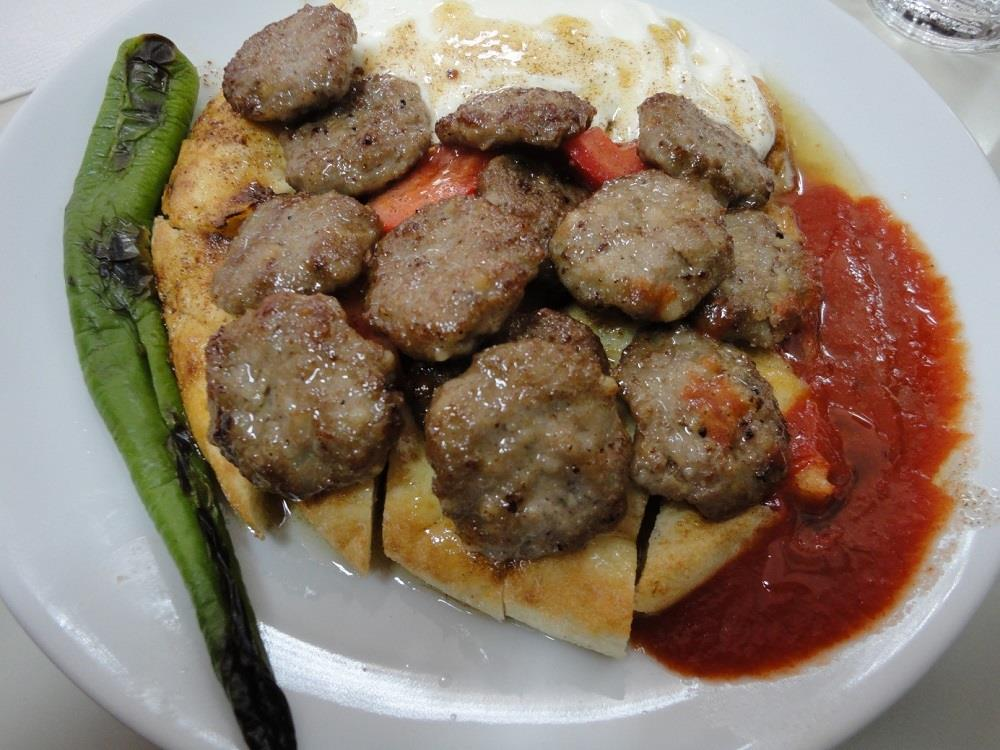
1. Pideli Köfte – Saucy Cousin of İskender Kebab
While İskender Kebab put Bursa on the global food map, Pideli Köfte is the city’s other meaty claim to fame. Think of it as a cousin of İskender: instead of thinly sliced döner meat, you get juicy köfte (grilled meatballs) laid over small cubes of pide bread, topped generously with tomato sauce and melted butter, and served with a side of yogurt.
The dish is said to have been born in the late 19th century, when meatball shops across Bursa wanted their own answer to the growing fame of İskender. Merchants and travelers who couldn’t always afford Iskender kebab. Local chefs soon realized they could use the same formula as Iskender kebab but with meatballs. Thus, Pideli Köfte was born, becoming a working-class staple that eventually grew into a Bursa classic.
💡 Insider Tip: The pide bread soaks up all the juices and butter, making it a dish best eaten quickly before the bread becomes soggy.
💡 Where to eat it: If you want the true, old-school experience, head to Çiçek Izgara, a Bursa institution dating back to the 1930s and still run by the same family. Another excellent spot is Uludağ Kebapçısı, near the city center, where you’ll find Pideli Köfte served in a no-frills, traditional setting that locals swear by.
💡 Personal Favorite:
2. İnegöl Köfte – The Meatballs That Conquered Türkiye
The story begins in the mid-19th century, when waves of Turkish migrants fled the Balkans after the Ottoman Empire lost territories. One of those migrants, Mustafa Efendi, came from the town of Plovdiv (today in Bulgaria) and settled in İnegöl, a district of Bursa. With him, he carried recipes and flavors from the Balkans — and out of this cultural meeting point came the creation of İnegöl Köfte.
Unlike many Turkish köfte recipes that are rich in spices, İnegöl Köfte focuses entirely on the meat itself. It is made with a blend of beef and lamb, seasoned with only salt and baking soda. The mixture is then rested overnight — which allows the baking soda to tenderize the meat. When grilled over charcoal, the köfte develop a smoky crust while staying soft inside. This simplicity is what made it stand out: it was all about the meat, nothing else.
By the early 20th century, İnegöl Köfte had already spread far beyond its hometown with meatball shops across Türkiye offering “İnegöl Köfte” on their menus, making it a regional dish to achieve true nationwide fame.
💡 Insider Tip: Pair your İnegöl Köfte with piyaz (white bean salad with onion and olive oil). This combination is as traditional as it gets and has been the standard accompaniment since the dish’s earliest days.
💡 Where to eat it: If you want the real thing, you need to go to İnegöl itself, about 45 minutes from Bursa city center. Köfteci Halim Usta is one of the oldest and most respected spots, carrying on traditions close to the original recipe.
3. Cantık – The Mini Pide of Bursa
If pide is the Turkish cousin of pizza, then Cantık is Bursa’s signature twist. These small, round or boat-shaped pastries are traditionally stuffed with minced meat, onion, and spices, though cheese and mixed vegetable versions are also common. The origins of cantık trace back to the bustling ovens of Kayhan Bazaar, where bakers created smaller, hand-sized pides to feed merchants and workers on the go. Today, locals still line up at bakeries or small family-run shops in Kayhan to grab these golden treats, often paired with a glass of ayran.
💡 Where to eat it: You can head to Kayhan Çarşısı (Kayhan Bazaar) and try the famous Kayhan Pidecisi or Cantıkçı Ethem, both beloved by locals.
💡 Personal Favorite: About a 20-minute walk (or 5-minute taxi ride) from the Green Tomb, you’ll find a tiny pide shop in Ortayol neighborhood that looks like it’s been frozen in time. This is not a touristy area and the shop caters to the local working class. It is old, run-down, with just four stools and no bathroom—don’t expect Instagram-worthy vibes. From the outside? Ugly. Inside? Bare-bones. But the cantık? Absolutely legendary. This humble spot has been serving locals for over 70 years, and the fresh, flavorful cantık will make you forget all about appearances. The menu is minimal: cantık, lahmacun, and a cold ayran or water. No frills, no fuss—just some of the best bites in Bursa. You’re not coming here for the looks; you’re coming for the flavor of a lifetime.
4. Cevizli Lokum – The Walnut Delight of Bursa
Don’t let the name fool you—this is not Turkish Delight. Bursa’s Cevizli Lokum is a soft, yeasted bread rolled with a generous walnut filling and baked until golden.
It’s believed to have originated as a household treat in Bursa’s villages, made for special occasions or as a sweet gift for neighbors. What began in the kitchens of Bursa soon traveled across Türkiye, finding its place in the rituals of family and celebration. Over time, it became tradition to serve these small rolls at pre-wedding ceremonies, symbols of warmth and blessing for the new couple. Even today, locals still gift them on special occasions, carrying forward a piece of Bursa’s heritage with every bite.
💡 Where to eat it: Check out Kardeşler Fırını in Osmangazi or the traditional bakeries near Kapalı Çarşı (Covered Bazaar).
Sweet Traditions of Bursa
1. Tahinli Pide – Sweet Tahini Bread
Bursa also has its own sweet specialty: Tahinli (or Tahanlı) Pide. Unlike the savory cantık, this is a soft, flat bread brushed generously with tahini mixed with sugar and sometimes sprinkled with walnuts.
It was first popularized in Bursa’s historic bakeries, especially in the early 20th century, when tahini mills flourished in the city. The sweet, nutty aroma of tahini combined with warm dough became a breakfast staple. You’ll still see locals queueing at neighborhood ovens on Sunday mornings, picking up a few warm tahinli pides to share with family.
💡 Where to eat it: Try Abdal Bakery. There is no other bakery in town that makes it quite like Abdal.
2. Kestane Şekeri – Candied Chestnuts
Chestnuts have been growing on the slopes of Uludağ for centuries, but it was in Bursa that they were turned into a delicacy. Kestane Şekeri—candied chestnuts slowly simmered in sugar syrup—was first produced commercially in the early 1900s.
The process is long and delicate: each chestnut is peeled, boiled, and soaked in syrup until it becomes soft yet holds its shape, with a glossy, caramelized finish. Today, shops like Kafkas and Sümbüllü are famous for selling this sweet souvenir, still made with chestnuts from Uludağ’s orchards.
💡 Where to eat it: Buy from Kafkas, the city’s first and most famous chestnut sweet shop.
3. Marşal Pasta – A Century-Old Cake with a Story
Not many cities can boast of a dessert that has become a symbol in itself, but Bursa has Marşal Pasta. This four-layer chocolate cake was first created in 1928 by Rasim Öztat at the historic Ulus Pastanesi.
Legend has it that the cake’s name, “Marşal” (Marshal), was inspired by a time when military ranks were seen as symbols of honor and prestige. Over time, with the influence of the Marshall Plan after WWII, the name stuck even more. Today, the original recipe remains a closely guarded family secret, trademarked and baked only by the descendants of its creator. If you want a taste of history with your dessert, Ulus Pastanesi is the only place to go.
💡 Where to eat it: Only Ulus Pastanesi serves the authentic Marşal Pasta—it’s their invention, and they’ve kept the recipe secret for nearly 100 years. Try their branch at Nalbantoglu as other branches do not follow the original recipe.
4. Kemalpaşa Tatlısı – Syrupy Dumplings
Though named after the town of Kemalpaşa just outside Bursa, this dessert has become a staple in the city. These small, golden dumplings made from semolina and cheese are baked, then boiled in syrup, and often topped with cream or kaymak.
They first appeared in the Ottoman era as a festive dessert, but their popularity quickly spread through Bursa thanks to traders who brought them into the city markets. Today, you’ll find them at local restaurants and sweet shops, often eaten warm with a scoop of thick cream.
💡 Where to eat it: Look for it in traditional dessert shops around Kayhan Bazaar or order it at classic restaurants like Çiçek Izgara.
5.Süt Helvası – Milk Halva
While halva is common across Turkey, Bursa has a special take called Süt Helvası, a creamy dessert made from milk, sugar, butter, and semolina. Its origins trace back to Ottoman kitchens, where it was often prepared for festivals and religious occasions. The creamy texture and delicate sweetness make it unlike other types of halva, which can be denser or nut-based.
💡 Where to eat it: Try it at Misi Hanımeli, a quaint bakery in the historic Misi village. The setting adds to the experience—small, cozy, and truly local.
Drinks That Tell a Story
1. Boza – An Ottoman Winter Comfort
Long before hot chocolate or pumpkin spice lattes became symbols of winter, Bursa’s streets in winter echoed with the call of boza sellers. This thick, slightly tangy drink made from fermented millet (sometimes bulgur or corn) is one of the oldest beverages in Anatolia, dating back to the Central Asian Turkic tribes. When the Ottomans made Bursa their first capital, boza came with them. It was hearty, nutritious, and filling—a drink that warmed soldiers, workers, and travelers alike during long winter nights. Over time, Bursa became one of the places where boza-making turned into an art form, with recipes carefully guarded and passed down through generations.
💡 Where to drink it: For a taste of the famous Istanbul brand without leaving Bursa, visit Vefa Bozacısı Bursa Şubesi, where the flavor is slightly adapted for tourists. For a more authentic experience, try Omur Bozacısı, a local favorite made closer to the original, traditional recipe.
2. Osmanlı Şerbeti – The Ottoman Drink of Bursa
Bursa has a long tradition of refreshing, fragrant drinks, and Osmanlı Şerbeti is one of its most celebrated. Rooted in the Ottoman era, this sherbet was originally prepared in palace kitchens for sultans and special ceremonies. Made with natural ingredients such as fruit extracts, herbs, and often sweetened with honey, it was prized for both its taste and its cooling, restorative qualities. Bursa, with its rich culinary heritage, became particularly known for producing high-quality versions of this traditional beverage.
💡 Where to try it: For an authentic experience, head to Muradiye Osmanlı Mutfağı in Bursa. They specialize in traditional Ottoman dishes and beverages, including Osmanlı Şerbeti, made with a mix of historical ingredients to give a true taste of the past. It’s a refreshing way to enjoy a sip of history while exploring the city.
Why These Dishes Matter
What sets Bursa apart is how its local food is tied to place, tradition, and family. While Istanbul dazzles with scale and variety, Bursa’s dishes tell quieter, deeper stories—of bakers in Kayhan Bazaar, of chestnut orchards on Uludağ, of a century-old cake baked in the same shop for four generations.
If you want to truly taste Bursa, don’t stop at İskender. Follow the smells of fresh dough in Kayhan, pick up candied chestnuts for the road, and make sure to sit down at Ulus Pastanesi for a slice of cake that has carried its name for nearly 100 years.
Because here, food isn’t just what you eat—it’s the flavor of history.